Ko Rang Yai Guide
Pearl oysters beneath the bay, two beaches turned toward different waters, and an island built around the slow manufacture of light
· 9 min read · Island Guides
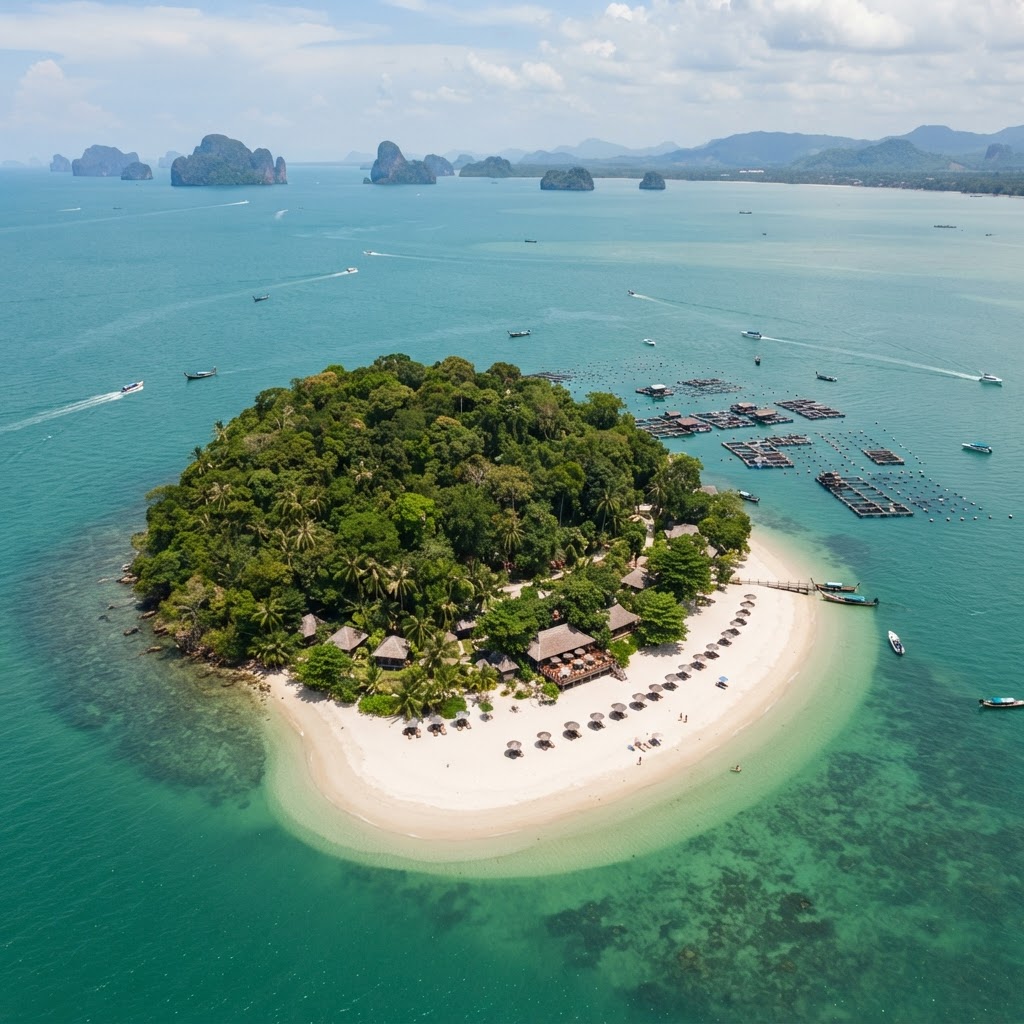
The long-tailed boat leaves Laem Hin through water already dense with activity. Floating restaurants sit low over the channel, fishing boats move between wooden piers, and Phuket's eastern shoreline remains close enough to distinguish roofs among the trees. Ko Rang Yai appears ahead not as a distant wilderness but as a green, folded shape held just offshore. The crossing takes around fifteen to twenty minutes, yet the approach has its own gradual reveal: first the palms, then the long western beach, then the structures of the pearl operation gathered near the landing. Longtails and speedboats traditionally make the journey from Laem Hin or Sapam Bay.(Phuket)
The island is shaped roughly like a shallow horseshoe, with beaches facing two different directions. The principal shore lies on the west, looking back toward Phuket across the protected water. It is broad, pale and unusually long for an island of this size, edged by coconut palms and casuarina trees rather than the abrupt limestone walls found farther into Phang Nga Bay. On the opposite side, a second beach opens toward quieter eastern water. The distance between the two is short enough to cross on foot, but the atmosphere changes completely. One shore carries arriving boats, shaded tables and the visible arrangements of a day on the island. The other feels more exposed to wind, tide and the wider bay.
Ko Rang Yai is known as Pearl Island not because pearls are sold there as souvenirs, but because the surrounding sea has been used to cultivate them. The farm belongs to one of Phuket's longest-established pearl businesses, and the process begins far from the polish of the finished jewellery. Oysters are suspended beneath the surface in baskets, nets or lines, protected and tended through changing water temperatures, sediment and marine growth. A technician introduces a small nucleus and a piece of mantle tissue into the oyster, prompting it to coat the intrusion with nacre. What eventually appears in a velvet box begins here as a biological response, built in microscopic layers over many months. Phuket Pearl Farm identifies itself as Phuket's first registered pearl-farm operator, while Thailand's official tourism sources continue to place the farm at the centre of Ko Rang Yai's identity.(Rang Yai Island)
The island makes the hidden stages of that process unusually tangible. Pearl cultivation is normally invisible from shore, occurring beneath a surface that gives nothing away. At Ko Rang Yai, the water itself becomes part of the visit. The oyster cages offshore, the handling areas, the demonstrations of implantation or harvesting when available, and the pearl showroom all belong to the same small geography. A pearl may be opened from the flesh of an oyster only metres from the beach, still dull with saltwater before cleaning reveals its lustre. Cream, white, blush, silver and darker green-grey tones appear not as artificial colours but as variations formed by species, nacre and cultivation conditions. Access to live demonstrations varies and should be confirmed, but the operating farm remains what separates Ko Rang Yai from the many nearby islands that offer only sand and lunch.(Tripadvisor)
There is a quiet logic to cultivating pearls here. The eastern side of Phuket is more sheltered than the open Andaman coast, its water protected by islands and headlands from the full force of the western monsoon. It is not the crystalline, theatrical blue associated with Racha or the Similans. It is softer and more changeable, sometimes jade, sometimes slate, sometimes almost silver beneath a white sky. Pearl oysters do not require scenery. They require stable water, patient tending and time. Ko Rang Yai's most valuable landscape therefore exists below the visible one.
On the western beach, the island becomes more immediately pleasurable. Longtails settle into the shallow water with their bows facing the sand. Coconut trees lean over scattered loungers, and the restaurant sits back in the shade rather than presenting itself as a polished beach club. The shore is long enough to walk beyond the main landing, where the noise of an arriving speedboat fades and the smaller textures of the beach emerge: oyster shell fragments, casuarina needles, bleached coral pieces and tiny crabs disappearing into the damp margin left by the tide.
The water along this coast has often been described for an unusual drifting sensation created by the gentle current parallel to the beach. Rather than swimming toward a fixed point, one can find oneself carried slowly along the shore, the palms and loungers changing position almost imperceptibly above the surface. Conditions vary with tide and weather, and it is not an attraction to be guaranteed, but it is one of the details repeatedly associated with Ko Rang Yai: warm, buoyant water moving laterally along a beach protected from the force of the open sea.(Trip Untold)
The island's interior is not dense jungle. Sandy tracks run beneath coconut and casuarina trees, connecting the two coasts and the working areas of the farm. Bicycles have traditionally been available for riding around the island, and official Phuket tourism information also lists canoeing and a small mini-golf course among its organised activities. These features give Ko Rang Yai the faintly idiosyncratic quality of an older Thai day island, developed before every shore was required to become either a luxury resort or a curated beach club. A bicycle under the palms, a pearl showroom near the sand and a miniature golf course on a small island in Phang Nga Bay make an improbable combination, but they belong specifically to this place. Availability should be confirmed because facilities and operating arrangements can change.(Phuket)
Lunch is usually taken near the western beach, beneath a roof open to the air. The food is straightforward: fried fish, prawns, rice, curries, noodles, coconuts and cold drinks, with the longtail boats visible through the trees. There is none of the carefully constructed separation between restaurant and landscape found at a resort. Sand remains underfoot. Wet towels hang from chairs. The smell of frying garlic drifts toward the beach, meeting saltwater and the faint mineral scent of oyster shells.
From the tables, Ko Rang Noi can be seen offshore, smaller and more private, while Phuket occupies the opposite horizon. The view gives Ko Rang Yai its peculiar sense of scale. It is not remote enough for the mainland to disappear, but it is sufficiently detached for Phuket to become scenery. Buildings, hills and marinas are reduced to a distant line, while the immediate island is organised around quieter elements: shell, shade, cultivated water and the slow passage of boats across the channel.
The second beach is less polished and less frequently photographed. Reached by crossing beneath the trees, it faces away from Phuket and toward the broken geography of the bay. The sand and water here respond differently to tide and wind, and the shore can feel more exposed, with fewer of the tables and chairs that define the western side. Standing there clarifies the island's horseshoe form. Ko Rang Yai is not simply one beach with greenery behind it, but a narrow body of land suspended between two marine environments.
By late afternoon, the west-facing shore takes on a pearly cast of its own. The water flattens, Phuket darkens across the channel, and the sun catches the upper curves of the longtail boats. In the farm, the oysters remain below the surface, continuing the work that gives the island its name. Their transformation is invisible, incremental and entirely indifferent to the visitors leaving for Laem Hin.
That is what makes Ko Rang Yai memorable. Its beauty is not limited to a pale beach or a brief boat ride from Phuket. The island is shaped by an industry whose raw material is time: oysters suspended in sheltered water, nacre accumulating one translucent layer after another, and a working pearl culture occupying the same compact landscape as coconut shade, bicycles, canoes and lunch beside the sand. Other islands may be more dramatic. Few possess such a specific relationship between what lies above the water and what is quietly being made beneath it.
Explore Ko Rang Yai
View the available routes, departure points and boat options for Ko Rang Yai.
View Ko Rang YaiRelated Guides
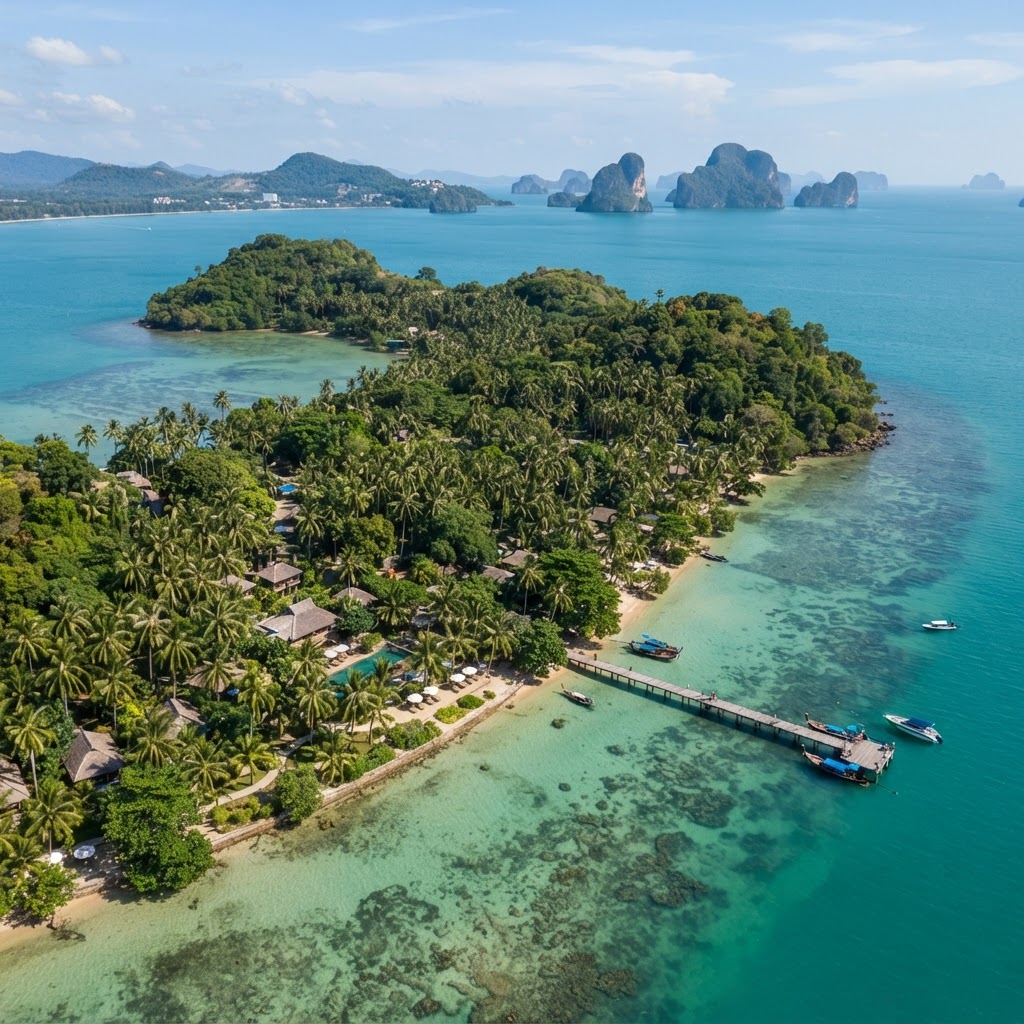
Ko Maphrao Guide: Beaches, Village Life and Floating Restaurants
Mangrove water, floating seafood restaurants, village roads and a ten-minute longtail crossing from Laem Hin.
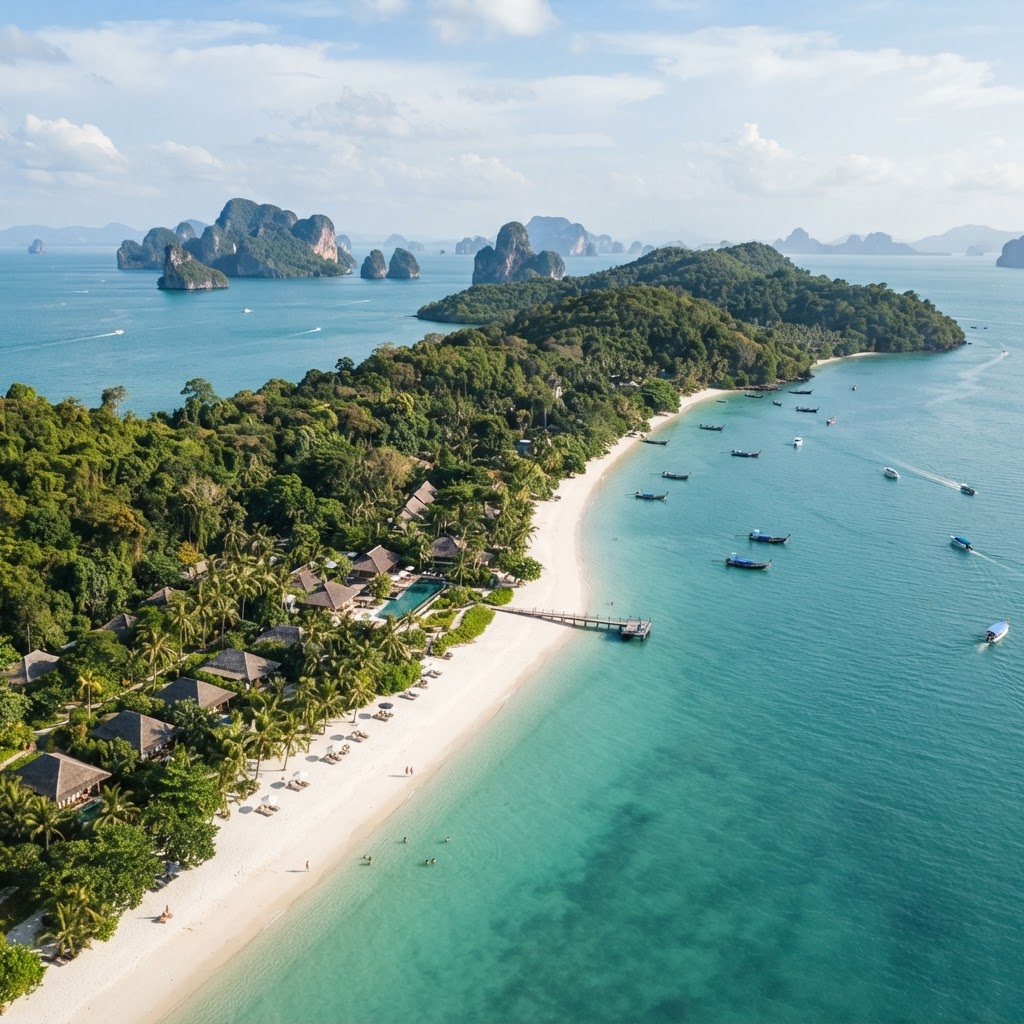
Ko Naka Yai Guide: Beaches, Island Life and Phang Nga Bay
Pale beaches, coconut groves, longtail boats and a limestone horizon across Phang Nga Bay.
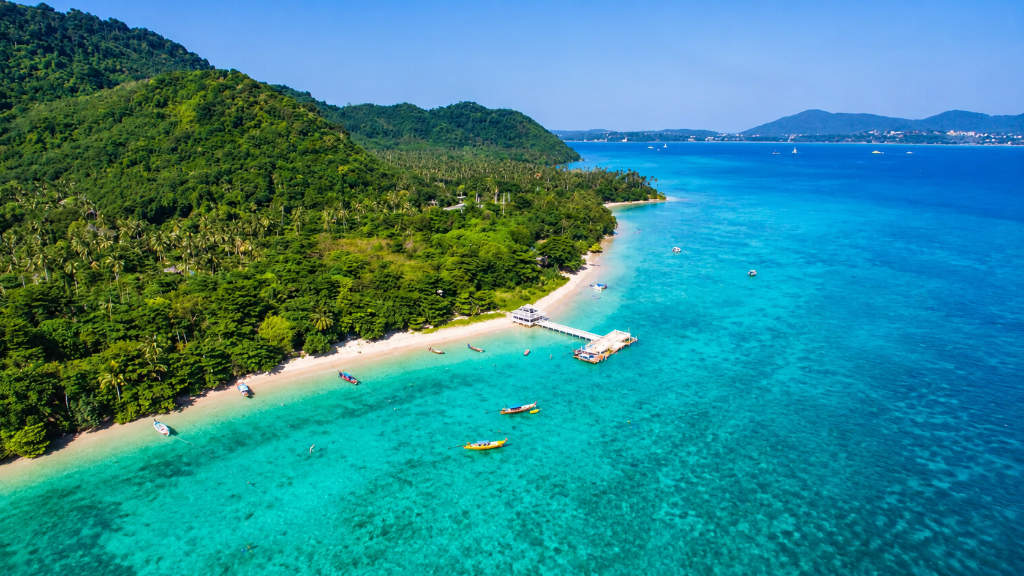
Ko Lon Guide: Beaches, Village Life, Hotels and Beach Club
A green island of tidal shores, village life and long lunches by the sea in Chalong Bay.