Ko Maphrao Guide
Mangrove water, floating kitchens, and an island close enough to reach before the city has quite disappeared
· 7 min read · Island Guides
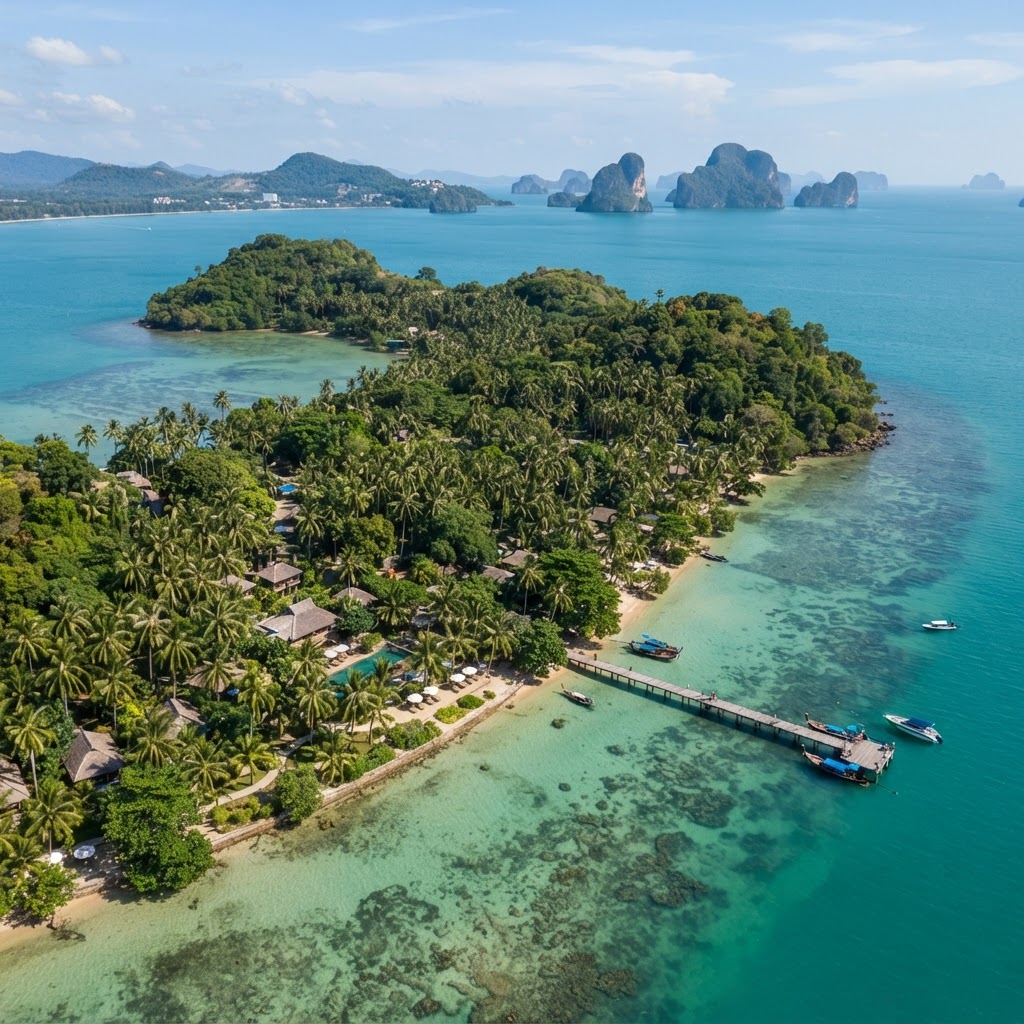
Ko Maphrao is reached almost before the journey has had time to become one. From Laem Hin Pier, a long-tailed boat crosses the narrow channel in five to ten minutes, passing low fishing craft and the floating seafood restaurants moored between the mainland and the island. Phuket remains clearly visible behind you, yet the arrival feels oddly complete. The road ends at the pier; the engine slows; wooden houses, mangroves and a green shoreline take its place.(Coconut Island Trip)
The island's English name, Coconut Island, suggests a landscape of palms, but Ko Maphrao is more varied and less polished than that. Coconut trees still rise above sections of the interior, though the coast is just as often shaped by mangrove roots, tidal mud and narrow beaches that widen or nearly disappear according to the hour. At low tide, the water draws back from the western shore, revealing wet sand scored with channels and the movements of crabs. At high tide, it returns beneath the trees and wooden piers, changing the coast without ever making it conventionally picturesque.
This is an east-coast island, and the water carries the softer colours of Phang Nga Bay rather than the brilliant blue of Phuket's open western beaches. In the morning it may appear silver-green, holding the reflections of clouds and longtail boats. Later, when the tide is high and the light stronger, the shallows brighten around the sandier edges. The loveliness of Ko Maphrao lies partly in this mutability. It is not a single immaculate beach preserved for admiration, but a working shoreline whose appearance changes with weather, water and use.
The village occupies the island in a quiet, practical way. Houses stand along narrow roads beneath fruit trees and palms; fishing equipment is left to dry near the shore; motorbikes and small local vehicles move between homes, piers and plantations. Ko Maphrao has long been associated with fishing and aquaculture, including fish and lobster raised in floating cages offshore. The Ministry of Tourism and Sports still identifies visits to these cage farms and the island's mangroves among its characteristic experiences.(Thailand Tourism Directory)
The floating restaurants are among the most memorable parts of the approach. They sit on timber platforms above the channel, reached by small boats from Laem Hin, with tanks and cages beneath or beside the dining areas. At Kruvit Raft, the journey from shore takes only a few minutes, and the dining room opens directly onto the water. Fish, crab, prawns and lobster arrive in a setting where the source of the meal is not abstracted from the table. The air smells faintly of salt, charcoal and engine fuel; plates are shared; boats pass close enough to interrupt the reflection of the sun.(Michelin Guide)
On the island itself, Coconut Seafood Restaurant offers a more local counterpoint to resort dining, while the larger hotels introduce another, far more polished version of Ko Maphrao. Barceló Coconut Island occupies a substantial stretch of beachfront, its villas and suites set through tropical gardens. The hotel's restaurants move between Thai and Asian flavours, Mediterranean cooking, Japanese dishes, wood-fired pizza and cocktails, while LAKU Beach Club brings pale seating, music and a brighter afternoon energy to the shore.(Barceló)
The resort is visible from the water in glimpses rather than as one grand façade. Roofs emerge between trees; villas face the bay; the beach club sits closer to the sand. A drink at LAKU belongs to a different rhythm from lunch on a floating raft, yet the two experiences are separated by only a short stretch of water. One offers chilled glasses, loungers and carefully arranged shade; the other has timber decks, live seafood and the movement of the channel beneath the floor. Ko Maphrao accommodates both without entirely surrendering to either.
Elsewhere, Island Escape by Burasari adds another large resort presence, with villas, pools and beach-facing hospitality set into the island's northern landscape. These developments have brought restaurants, spa treatments, water activities and more elaborate accommodation, but beyond their grounds the island quickly returns to village roads, mangrove edges and ordinary homes. The transition is abrupt enough to be revealing. Ko Maphrao is not a resort island with a village hidden behind it. It is an inhabited island upon which resorts have been built.
The beaches are quieter than their hotel photographs might suggest. Their beauty depends heavily on tide and light. Some mornings bring calm water and a smooth band of sand beneath the palms; at other times the sea has retreated far enough to expose a broad tidal margin. Swimming is most inviting when the water is high, though the resorts' pools and beachfront facilities often provide the more dependable version of a languid afternoon.
By late day, the channel takes on the colour of pewter. Boats move back toward Laem Hin, their long propeller shafts lifted as they approach shallow water. At the floating restaurants, lights begin to appear above the decks. Across the island, the beach clubs settle into evening service while village houses remain half concealed by trees.
Ko Maphrao is compelling because distance has so little to do with difference. It lies only minutes from Laem Hin, close enough that the mainland is never truly lost, yet its shoreline, floating kitchens, aquaculture cages, village roads and resort beaches belong to another arrangement of life. The crossing is almost absurdly brief. The change in atmosphere is not.
Explore Ko Maphrao
View the available routes, departure points and boat options for Ko Maphrao.
View Ko MaphraoRelated Guides
Ko Lon Guide: Beaches, Village Life, Hotels and Beach Club
A green island of tidal shores, village life and long lunches by the sea in Chalong Bay.
Ko Yao Yai Guide: Beaches, Villages, Hotels and Island Life
Rice fields, rubber trees, tidal beaches, fishing villages and polished resorts share one long green island in Phang Nga Bay.
Where Do Boats Depart From Around Phuket?
Rawai Beach, Chalong Pier, Ao Po, Royal Phuket Marina and more — a guide to Lennam's departure points across the island.