Ko Yao Yai Guide
Rice fields, tidal sandbanks, and long roads beneath the rubber trees
· 9 min read · Island Guides
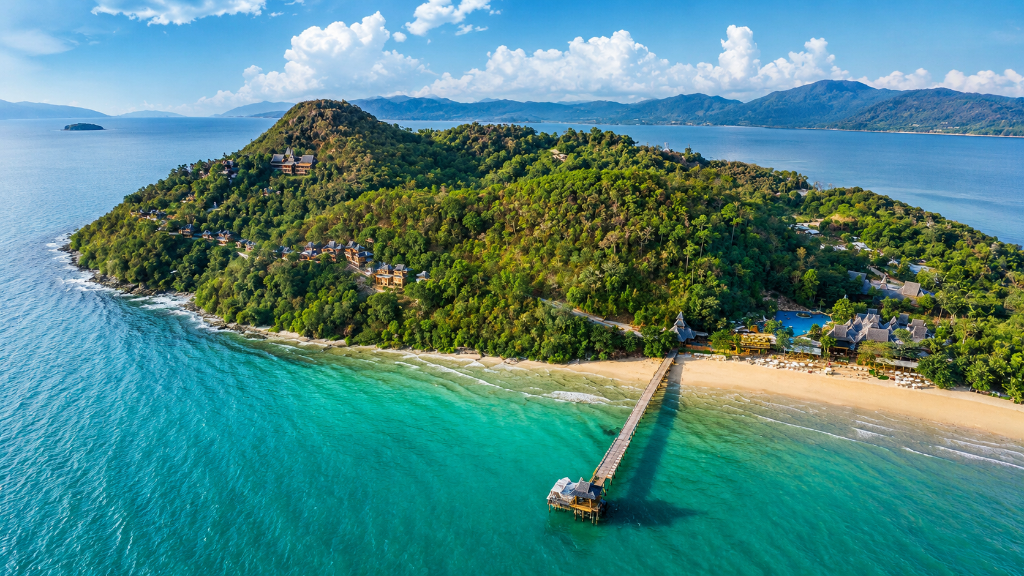
Ko Yao Yai reveals itself slowly. From the water, the island is a long green mass stretched across Phang Nga Bay, its central ridge softened by jungle and its shoreline broken by mangroves, small beaches and fishing villages. Once ashore, the scale changes. The sea slips out of sight behind rubber trees and coconut palms, and the road runs inland past wooden houses, mosques, rice fields and roadside stalls where fruit is arranged beneath corrugated roofs. Ko Yao Yai is large enough to contain an interior life, and much of its beauty lies in the distance between one shore and the next.(Tourism Authority of Thailand)
The island has not been organised around a single beach or resort strip. Villages are dispersed along quiet roads, with fishing, rubber cultivation and agriculture still visible in the landscape. Water buffalo stand in the rice paddies after rain, and sheets of latex hang near the plantations in pale, translucent rows. Offshore, floating lobster farms sit above the water, tended by families whose connection to the bay is practical rather than picturesque. These details do not feel staged for visitors. They form the texture of an island that was lived in long before it was marketed.(Facebook)
At the northern end, Laem Had is Ko Yao Yai's most distinctive piece of shoreline. At low tide, a white sandbank narrows into the sea, curving toward Ko Yao Noi across the channel. The water lies on both sides, pale and shallow near the sand, deeper and greener beyond it. Seen from above, it appears almost drawn by hand, too precise for the surrounding mangroves and dark-green hills. From the ground, the beauty is quieter. One walks along warm, compacted sand with boats moving in the channel and the opposite island suspended close across the water. As the tide returns, the shape begins to disappear, and the beach becomes ordinary again until the sea withdraws.(Koh Yao Yai Village)
Loh Pared, on the western coast, belongs to another version of the island. The beach is broader and more settled, with palms, small restaurants and Santhiya Ko Yao Yai rising into the hillside behind it. The resort's teak buildings are elaborate up close, carved balconies, steep roofs and polished wood, yet from the beach they merge into the tropical slope. By late afternoon, tables face the western light, and the day begins to gather around drinks at the Jetinn Sunset Lounge or dinner overlooking the Andaman Sea at Chantara. The menus move easily between Thai food and international dishes, but the more memorable detail is often the setting itself: a plate of grilled fish, a cold glass damp with condensation, and the sea turning silver beyond the railing.(Santhiya Koh Yao Yai)
Farther east, Ko Yao Yai Village sits above a quieter bay, its bungalows and villas spread through tropical gardens rather than gathered into a single formal block. Khayee Restaurant looks over the pool and the water beyond, while the beachfront dining areas bring lunch closer to the tide. Southern Thai flavours feel particularly at home here: seafood, curries, herbs, rice and dishes shaped by the island's own ingredients. The resort's references to cashew, local fruit and regional cooking are a reminder that Ko Yao Yai's food is rooted as much in its fields and gardens as in the surrounding sea.(Koh Yao Yai Village)
Anantara Ko Yao Yai has introduced a different scale of hospitality to the island, with villas, family facilities, pools and several restaurants facing the bay. At Pakarang, Thai dishes are served throughout the day; TOMI looks outward from its Japanese dining room; and the Beach Restaurant places whole fish, lobster and dry-aged meat beside the shore. The architecture is more polished and contemporary than the island's village houses, but the horizon remains the strongest element. Even at its most refined, Ko Yao Yai resists becoming merely a resort setting. Beyond the landscaped grounds, the roads return quickly to plantations, mosques, fishing boats and open fields.(Anantara Hotels & Resorts)
Away from the hotels, the island's meals are simpler and often more revealing. Small roadside restaurants serve fried fish, curries, grilled seafood, noodles and rice beneath fluorescent lights or open timber roofs. Fresh coconuts are split at the counter. Iced coffee arrives in tall plastic cups. At local shops, shelves hold household goods beside snacks, fishing tackle and bottles of sauce. Alcohol is less visible than on many Thai islands, reflecting Ko Yao Yai's predominantly Muslim communities, and the atmosphere remains distinctly local even where visitors have become familiar.(Travelfish)
The island is best seen without haste. A scooter or local po tong carries you along narrow roads beneath rubber trees, past children in school uniforms, roadside fruit stalls and glimpses of the bay between houses. There are no grand viewpoints demanding attention every few kilometres. Instead, the island accumulates through smaller scenes: a fisherman repairing nets in the shade, buffalo moving through a flooded field, a mosque roof above the palms, a longtail tied beside a mangrove creek. By the time the road returns to the sea, Ko Yao Yai feels less like a destination visited than a place briefly entered.
Toward evening, the western shore takes the last of the light. The tide draws a reflective sheen across the sand, restaurant tables begin to fill, and the road grows quieter as people return home. Across the bay, Phuket and the limestone islands remain visible, but they seem to belong to another pace. Ko Yao Yai's distinction is not remoteness. It is continuity. The villages, farms, resorts and beaches occupy the same island without entirely displacing one another, and the landscape still feels governed by tides, work and ordinary life.
The memory of Ko Yao Yai is therefore less a single view than a sequence: white sand narrowing into the sea at Laem Had, rubber trees leaning over the road, seafood arriving beneath the palms at Loh Pared, and rice fields holding the late-afternoon sky.
Explore Ko Yao Yai
View the available routes, departure points and boat options for Ko Yao Yai.
View Ko Yao YaiRelated Guides
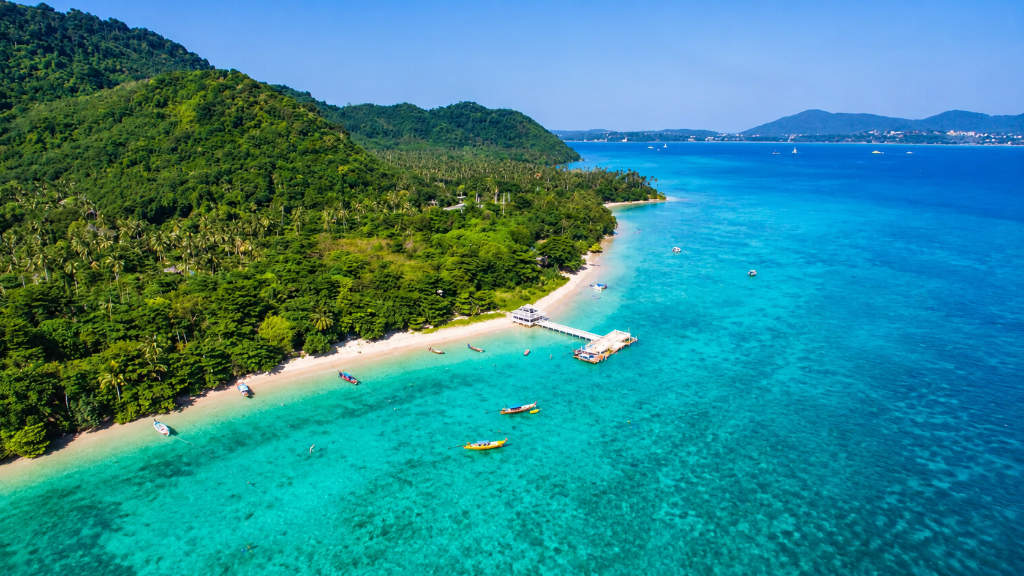
Ko Lon Guide: Beaches, Village Life, Hotels and Beach Club
A green island of tidal shores, village life and long lunches by the sea in Chalong Bay.
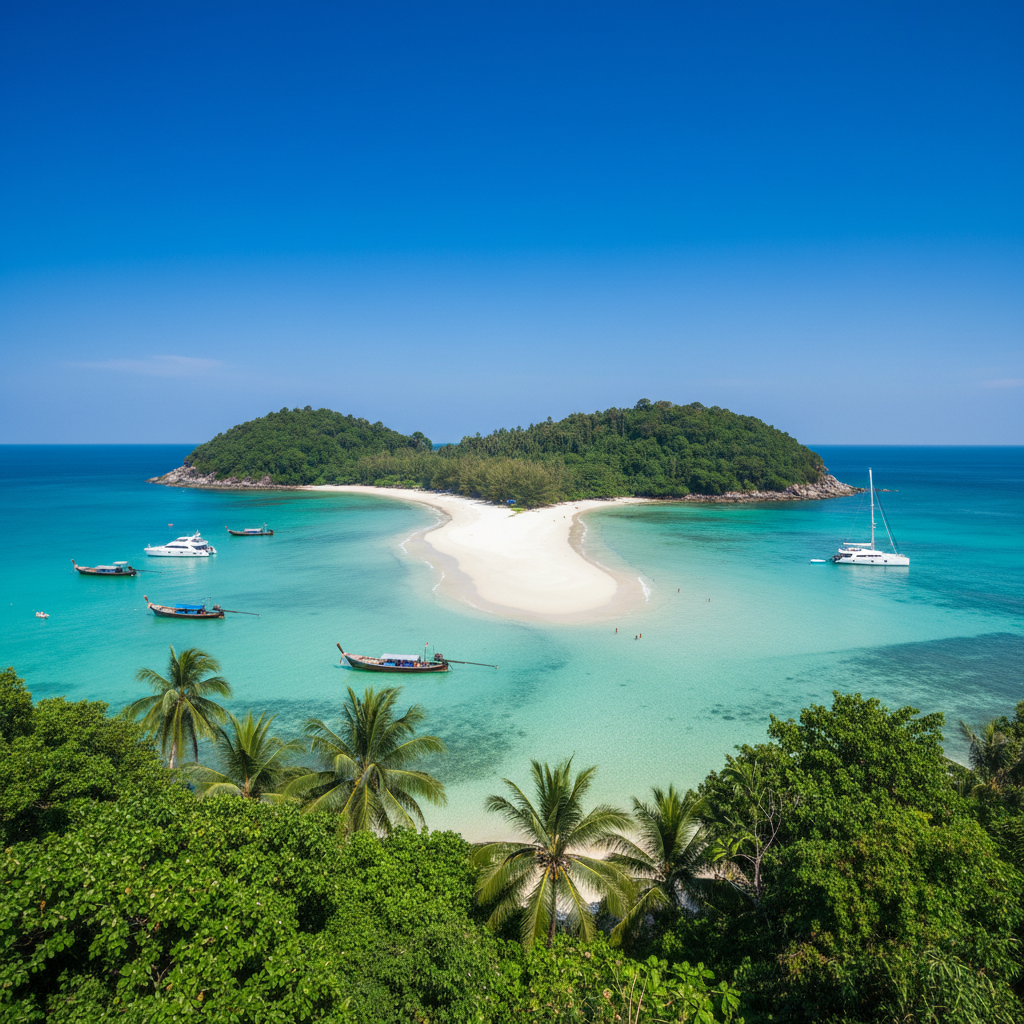
Racha Island Guide: Beaches, Hotels and Snorkelling
White bays, forested hills and clear eastern coves on one of the Andaman coast's most distinctive islands.
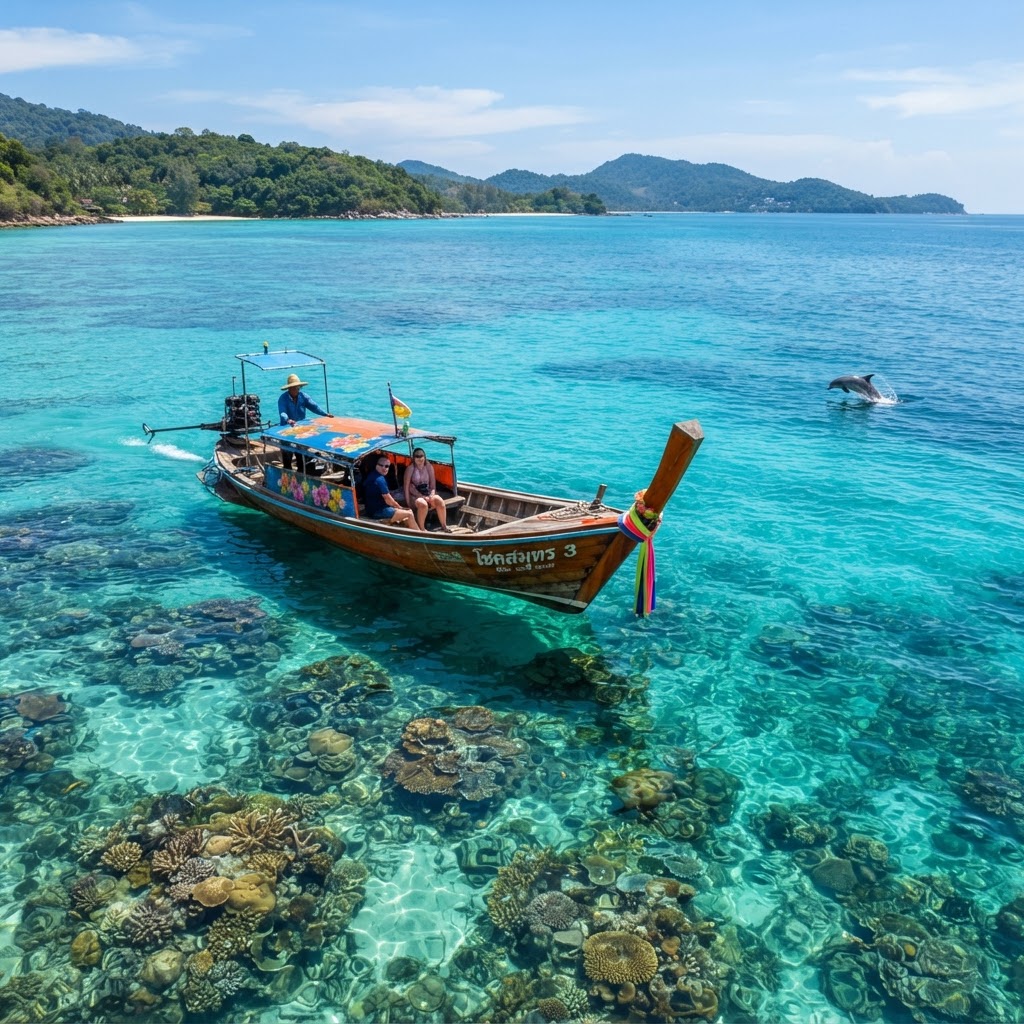
Maithon Island Guide: Beach, Coral, Dolphins and Island Character
A pale beach, clear reef, forested ridge and the quiet traces of a former private resort.