Ko Naka Yai Guide
Pale eastern beaches, coconut shade, and the long limestone horizon of Phang Nga Bay
· 8 min read · Island Guides
Ko Naka Yai sits just beyond Phuket's northeastern shore, close enough that the crossing from Ao Por feels less like a departure than a loosening of the mainland. Marinas, mangroves and low green headlands fall behind; ahead, the island resolves into coconut trees, broad beaches and water opening toward the limestone islands of Phang Nga Bay. The journey is brief, but the horizon changes almost immediately. Phuket becomes a dark, familiar line at your back, while the bay gathers itself in layers of blue-grey rock and humid distance.
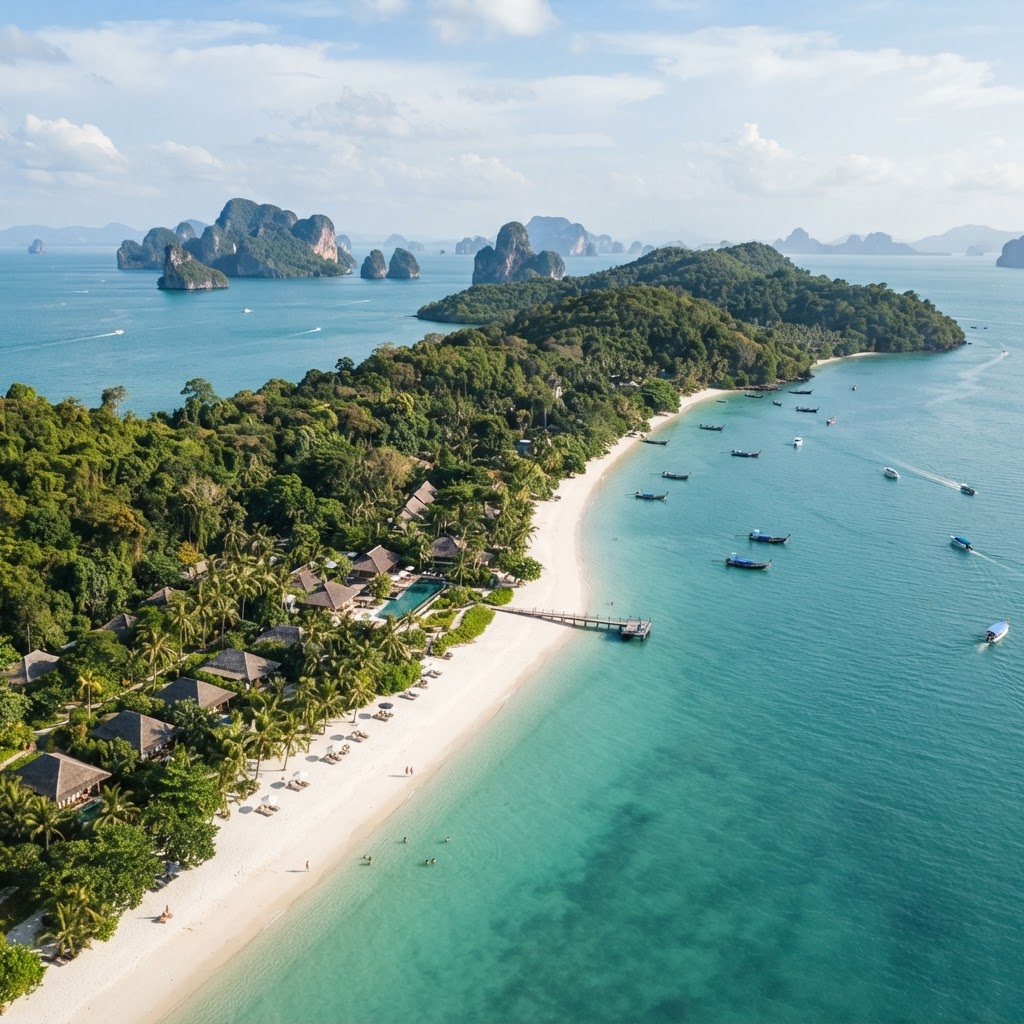
The island is larger than it first appears from the boat. Its shoreline holds several beaches rather than one defining crescent, with wide sandy areas on the east and northwest coasts and quieter stretches shaped by tide, vegetation and private development. On the eastern side, the beach looks outward across the bay, where limestone formations rise beyond the water in softened silhouettes. The sand is pale, the shallows often warm and gently graded, and the view has the composed depth of a painted screen.(Sayama Luxury)
The eastern beach carries the island's more sociable rhythm. Long-tailed boats rest in the shallows with their coloured ribbons lifting in the breeze. Loungers and umbrellas appear along parts of the sand, and simple beachfront arrangements offer shade, cold drinks and lunch close to the water. Jet skis and other activities may operate in designated areas, giving the shore a livelier energy than the island's green interior suggests. Yet the beach is long enough for the mood to change as one walks, from voices and engines near the landing area to quieter sand where casuarina needles collect above the tide line.(Sayama Luxury)
The light here belongs unmistakably to the east coast. It lacks the hard, saturated blue of Phuket's western beaches and is more interesting for it. In the morning, the sea may appear almost metallic, reflecting white cloud and the dark bases of distant islands. Later, the shallows turn pale green over sand, while deeper water takes on the muted turquoise particular to Phang Nga Bay. At low tide, the beach extends and the sea seems to withdraw toward the limestone horizon. At higher water, boats draw closer to the palms and the island feels more generously surrounded.
Behind the beach, Ko Naka Yai becomes a landscape of coconut groves, narrow roads and tropical undergrowth. The interior is not arranged as a promenade, and that is part of its appeal. Paths move between palms and modest buildings; motorbikes pass in brief bursts; the sea disappears, then returns suddenly at the end of a track. The island's scale allows for both resort polish and ordinary local life, though neither should be mistaken for unrestricted access. Beaches, piers, restaurants and facilities may belong to separate operators, and what is available to one visitor may not be available to another.
At the northern end, The Naka Island, a Luxury Collection Resort & Spa occupies a more secluded expression of the landscape. Villas and suites are arranged among gardens and along the shore, with views toward the sea, beach and island vegetation. The resort has three beachside restaurants, a spa, pools and a programme of activities that includes mangrove discovery, but these belong to the hotel rather than to the island as a whole.(Marriott)
The most atmospheric of its dining spaces is perhaps not defined by formality so much as by placement. Tonsai sits close to the sea, spread across several levels with an open-air section facing the water. Rum Chapel brings Mediterranean flavours to a poolside setting overlooking the beach, while Z Bar turns toward the bay with daybeds, cocktails and the late light moving across Phang Nga's karst silhouettes. The details are carefully composed, but the strongest element remains outside the frame: the movement of weather and water beyond the tables.(Marriott)
Aiyara offers the resort's more specifically Thai register. Recent accounts describe Southern Thai cooking informed by produce from the property's garden, with dishes carrying the sharper flavours of tamarind, chilli, coconut and herbs rather than a softened resort approximation. It is the kind of meal that suits the island at night, when the brightness has left the beach and the bay becomes a dark field broken only by boat lights and the faint outline of Phuket.(Northabroad)
For a day visitor, Ko Naka Yai is less about moving rapidly through attractions than allowing the island's separate textures to unfold. A swim from the eastern beach, lunch in the shade, a slow crossing toward quieter sand, then the return to the boat as the tide begins to change. The island is close enough to combine with Ko Naka Noi or Ko Rang Yai, but it does not need to be treated as a pause between more famous places. Its pleasure lies in the breadth of its beaches, the softness of the bay, and the way the limestone horizon remains present even when nothing else is happening.
By late afternoon, the umbrellas cast longer shadows and the heat leaves the sand. Boats begin to lift from the beach one by one, turning west toward Ao Por and the mainland. The resort terraces prepare for dinner; farther along the shore, chairs are stacked, ropes gathered and engines checked. Across the water, Phuket feels near again.
Ko Naka Yai is not remote, nor does it pretend to be. Its distinction comes from proximity without sameness. Within a short journey of Phuket, the roads narrow, the water quiets, coconut shade replaces marina roofs, and Phang Nga Bay opens across the entire eastern horizon.
Explore Ko Naka Yai
View the available routes, departure points and boat options for Ko Naka Yai.
View Ko Naka YaiRelated Guides
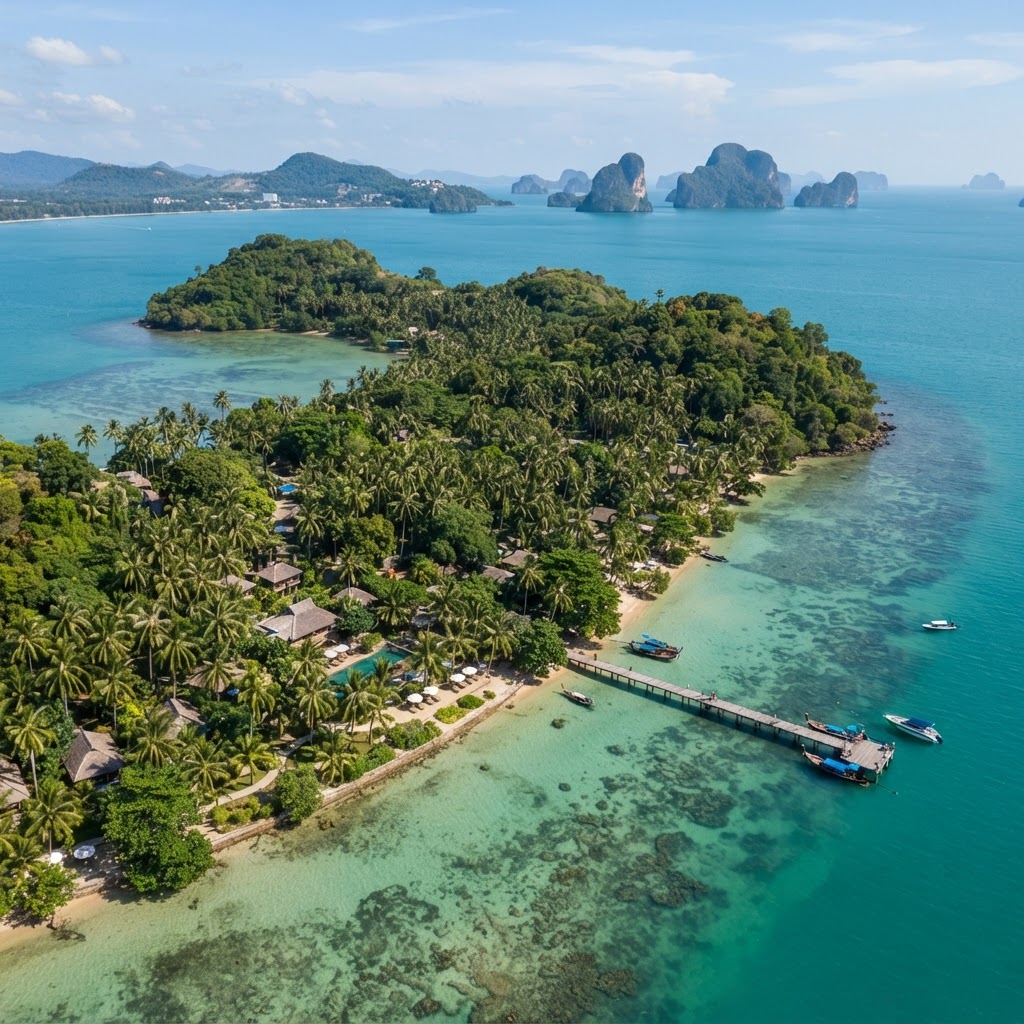
Ko Maphrao Guide: Beaches, Village Life and Floating Restaurants
Mangrove water, floating seafood restaurants, village roads and a ten-minute longtail crossing from Laem Hin.
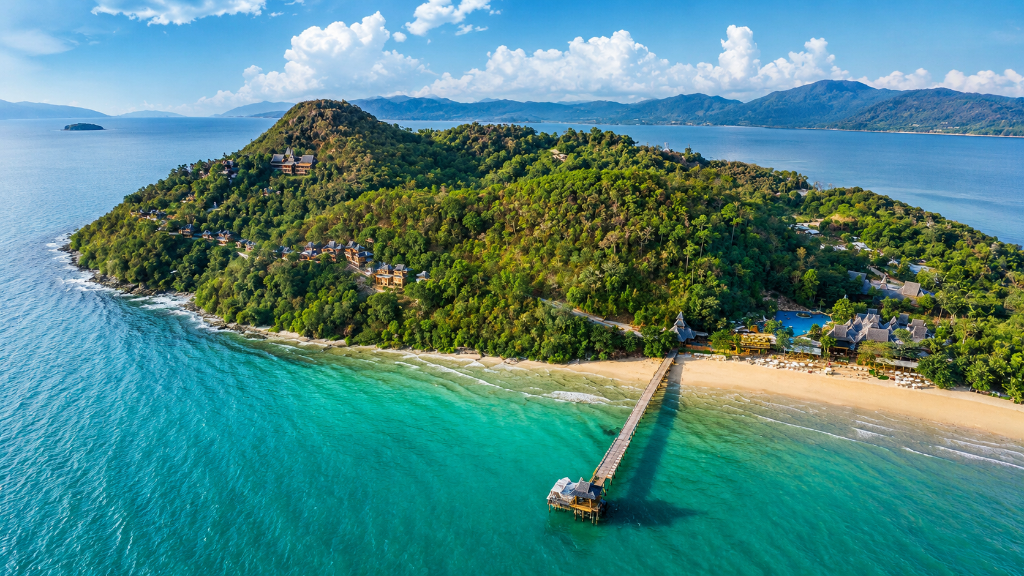
Ko Yao Yai Guide: Beaches, Villages, Hotels and Island Life
Rice fields, rubber trees, tidal beaches, fishing villages and polished resorts share one long green island in Phang Nga Bay.
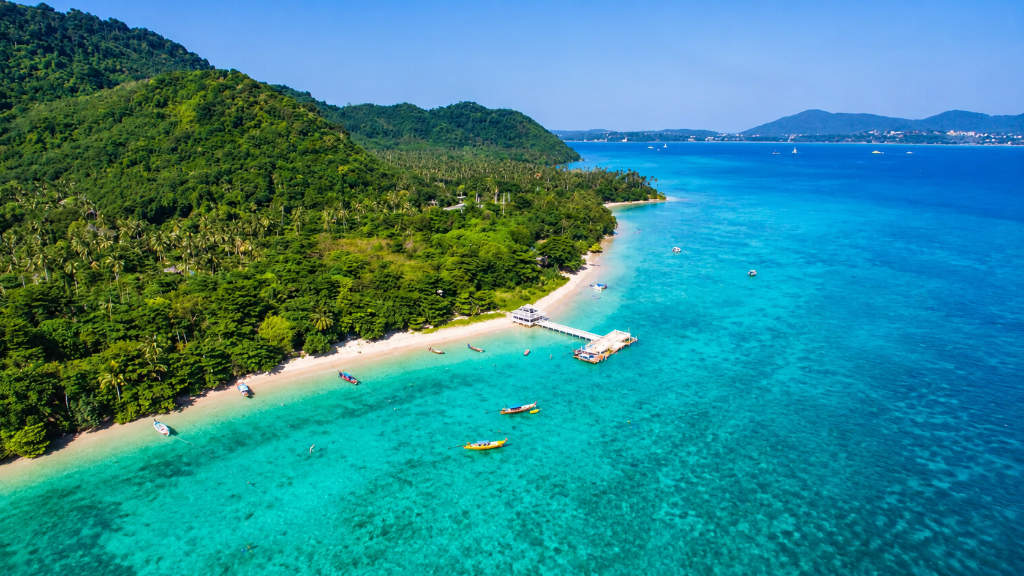
Ko Lon Guide: Beaches, Village Life, Hotels and Beach Club
A green island of tidal shores, village life and long lunches by the sea in Chalong Bay.