Ko Yao Noi: The Quiet Heart of Phang Nga Bay
· 6 min read · Island Guides
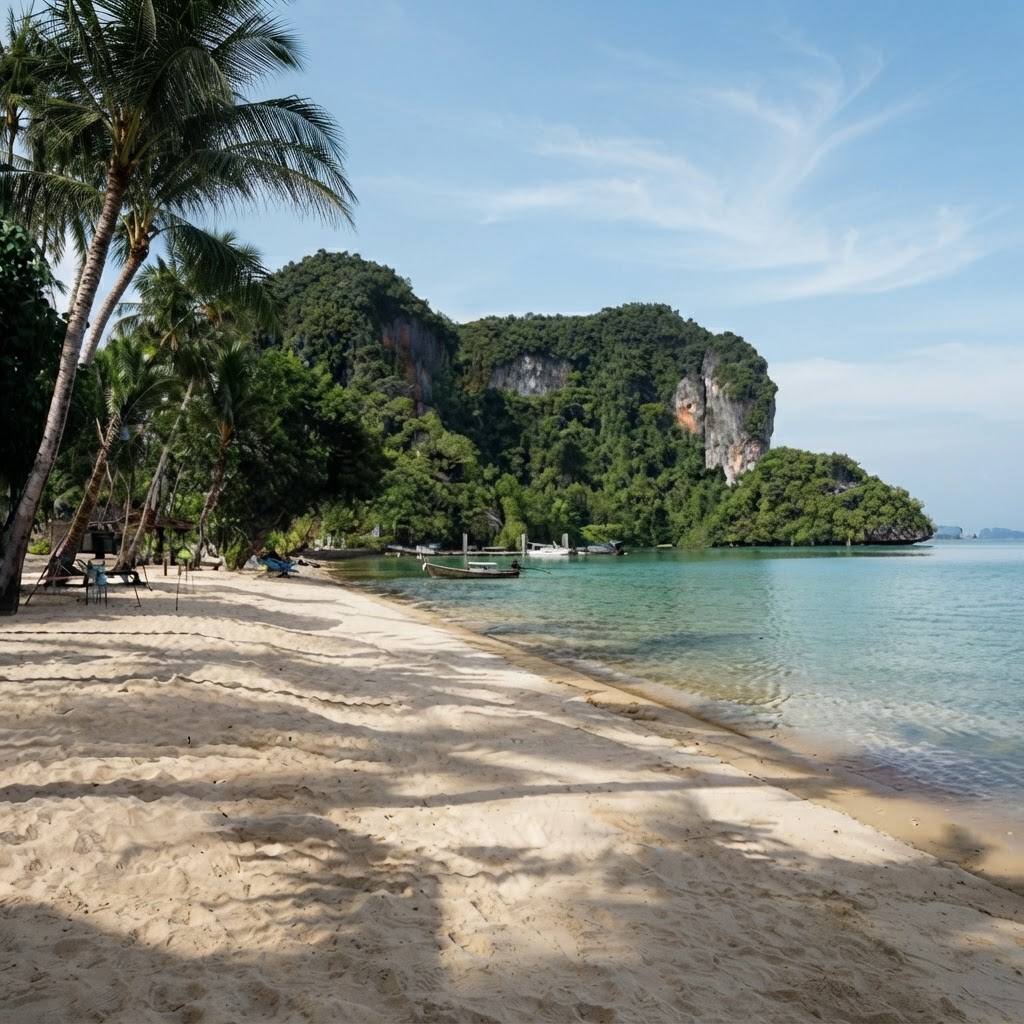
Set between Phuket and the limestone theatre of Phang Nga Bay, Ko Yao Noi feels remarkably composed for somewhere so accessible. Coconut palms lean over narrow roads. Fishing boats rest beside wooden piers. Rice fields appear between villages, and beyond them, the sea opens towards a horizon punctuated by improbable karst formations.
Ko Yao Noi is not untouched, nor should it be described as a secret. There are elegant resorts, small restaurants and a growing number of travellers drawn to its slower pace. Yet daily life remains visible here. Children travel to school, fishermen repair their nets, and rubber trees, mangroves and modest homes still define much of the island.
Tourism is present, but it has not entirely redrawn the place around itself.
The Island's Rhythm
Along the eastern coast, views stretch across Phang Nga Bay towards limestone islands rising almost vertically from the water. Inland, the scenery softens into plantations, rice paddies and small communities where fishing and agriculture remain part of ordinary life.
Even the more refined hotels tend to sit discreetly within the landscape, favouring gardens, sea views and low-slung architecture over spectacle. The island's beauty is rarely concentrated in a single landmark. It appears in fragments: charcoal smoke drifting from a roadside kitchen, the changing colour of the bay, a shaded pier, or the call to prayer carried across the village in the late afternoon.
Ko Yao Noi is predominantly Muslim, and visitors should dress with consideration away from beaches and resorts. Light clothing that covers the shoulders and upper legs is more appropriate in villages, restaurants and community spaces.
The Beaches of Ko Yao Noi
Ko Yao Noi's beaches are not uniformly powder-white, and that is part of their character. Many are tidal, changing considerably over the course of the day.
At higher tide, the eastern coastline becomes inviting for swimming and paddling. At low tide, the sea retreats across stretches of sand, rock and exposed seabed, revealing a more elemental shoreline.
Pasai Beach is among the island's better-known coastal areas, with open views across the bay. Klong Jark Beach and the quieter stretches further north feel more secluded, particularly early in the morning.
The appeal lies less in immaculate shoreline than in the setting. Warm water, long views and the silhouettes of Phang Nga Bay give even the simplest beach an arresting backdrop.
A Perfect Day on Ko Yao Noi
Begin just after sunrise, when the limestone formations across Phang Nga Bay seem almost blue in the early light. Follow the narrow road past rubber trees, coconut groves and quiet villages, stopping beside rice fields where water buffalo stand in the shallows.
By midmorning, continue towards the eastern coast for coffee overlooking the bay, then take a small local boat through mangroves and between nearby karsts. Pause at a hidden beach or lagoon before the afternoon tide alters the shoreline, then return for a late lunch of southern Thai dishes and fresh seafood.
Later, visit a batik workshop or fishing community where Ko Yao Noi's traditions remain part of daily life. As evening approaches, ride along the coast while the cliffs soften into pale grey silhouettes and the call to prayer travels across the villages.
End the day beside the water, watching the last boats cross the bay.
Exploring the Island
Ko Yao Noi reveals itself along narrow roads edged with banana leaves, rubber trees and low houses shaded by corrugated roofs. In the early morning, scooters pass slowly beneath coconut palms while fishermen sort nets near the water. Inland, rice fields open unexpectedly between villages, their flooded surfaces reflecting sky, palms and the occasional water buffalo standing motionless in the heat.
A bicycle suits the flatter roads and cooler hours. By midday, when the sun becomes emphatic, a scooter or local sidecar taxi is the more comfortable choice. The landscape shifts almost imperceptibly from coast to farmland, from mangrove edge to plantation, from small cafés to mosques and working piers.
There are moments of exquisite ordinariness everywhere. Bright batik cloth drying in the shade. Chickens moving between garden gates. Children returning from school as the afternoon light turns the rice fields silver.
Batik workshops, fishing visits and agricultural experiences offer a closer view of this rhythm, particularly when they are locally led and intimate in scale.
Phang Nga Bay by Boat
From Ko Yao Noi, Phang Nga Bay appears almost close enough to touch. Its limestone towers rise beyond the eastern shore in layers, pale at dawn, deep green by noon and violet-grey as the day begins to fade. Seen from the water, their sheer faces lift directly from the sea, streaked with mineral stains and softened by vegetation.
A boat threads through this landscape as though moving between rooms. Narrow channels open into broad lagoons. Cliffs conceal small beaches until the final moment. Mangroves gather at the waterline, while sea caves lead into shadowed chambers where sound changes and the heat briefly lifts.
Nearby islands such as Ko Hong and Lao Lading offer swimming, snorkelling and kayaking, but the bay itself remains the principal attraction. As the boat moves, solitary karsts merge into larger formations, hidden passages appear and distant cliffs seem to float above the haze.
Tide and timing shape the day. A lagoon may be accessible only at certain hours, a beach newly revealed, or a landing softened by deeper water. A private route allows the journey to follow these shifts rather than a rigid sequence, choosing fewer places and experiencing them well.
Explore Ko Yao Noi by Private Boat
Reach Ko Yao Noi's quiet shores, rice fields and limestone horizons by private speedboat, catamaran or yacht from Phuket.
View Ko Yao Noi