Ko Kaeo Yai Guide
A sea-worn sanctuary of saffron roofs, granite ledges and a Buddha watching the southern horizon
· 5 min read · Island Guides
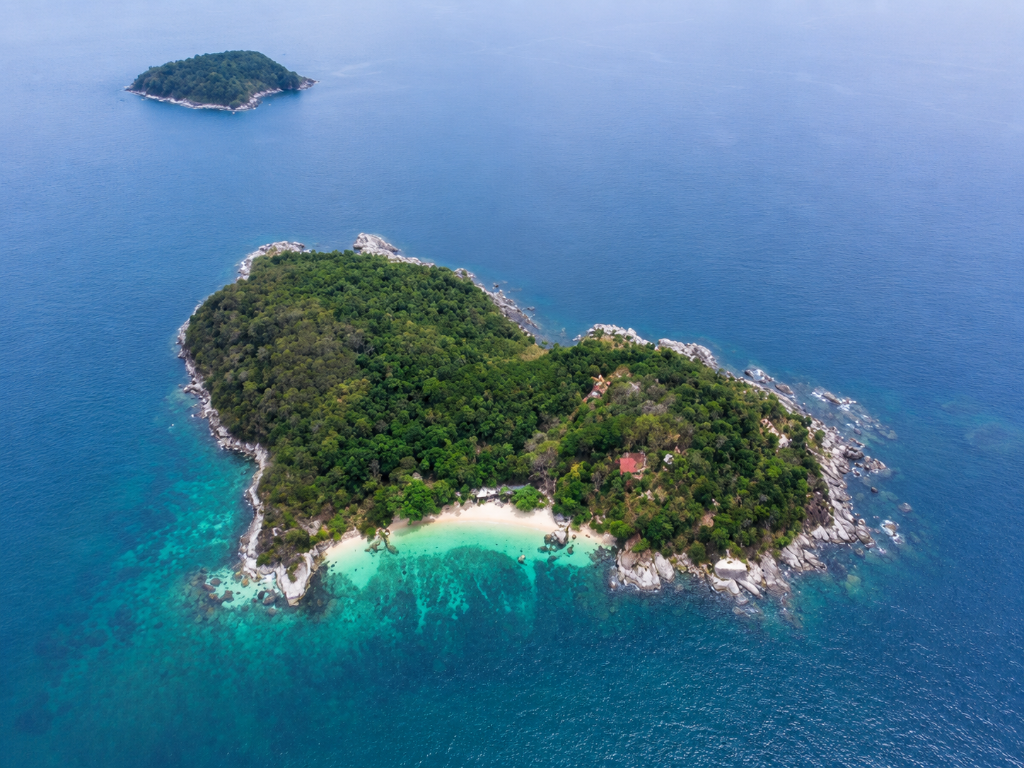
The crossing from Rawai is short. Within twenty minutes the longtail has cleared the beachfront and the anchored fishing boats, and Phuket's southern coast settles into a low green line behind the stern. Ko Kaeo Yai appears beyond Promthep Cape as a dark, forested rock rising from the sea — not large, not dramatic in the manner of the limestone islands farther north, and giving little away at a distance. What sets it apart from the other islands visible from Rawai is not its shape but what has been built quietly among its trees.
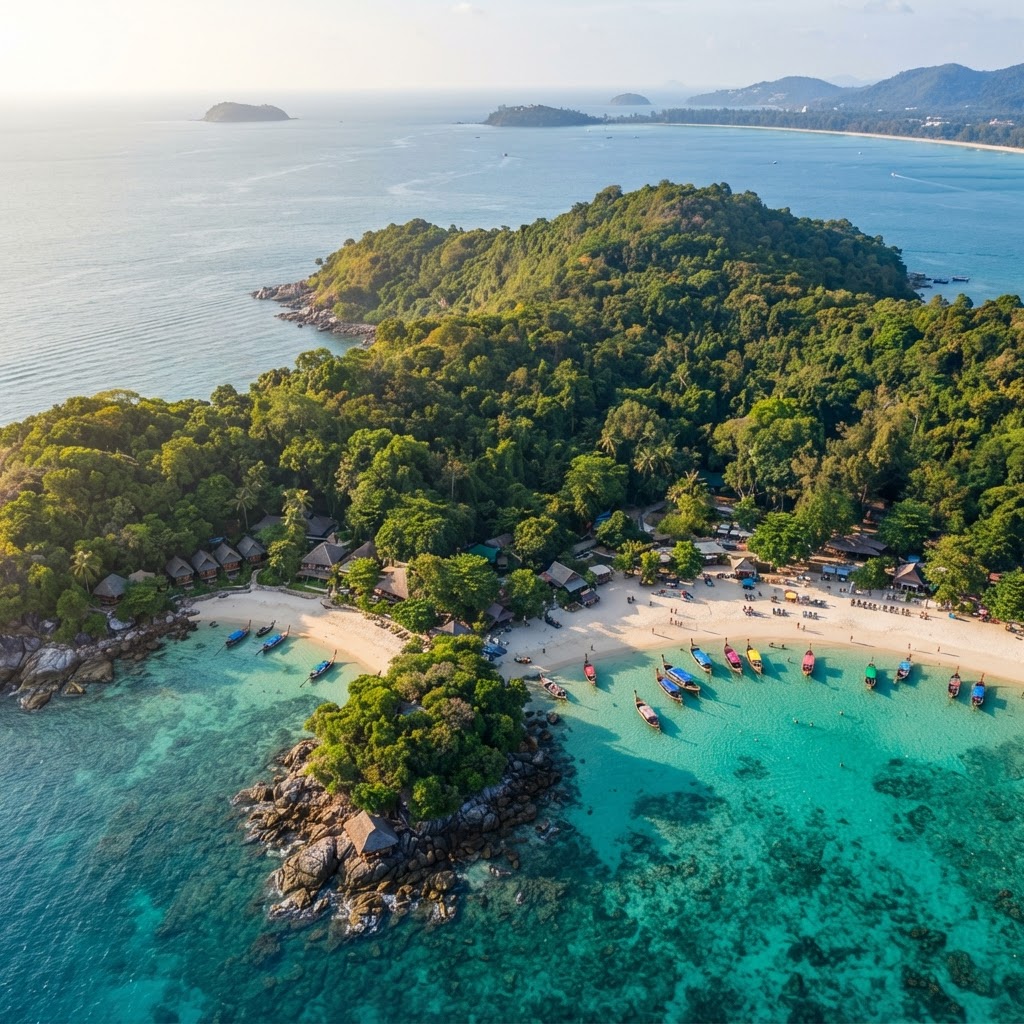
The island is a functioning monastery. Saffron and terracotta roofs emerge through the canopy as the boat draws near, and the shoreline resolves into granite ledges and narrow coves rather than a stretch of sand. Steps and stairways climb the slope, passing shrines, bells, painted railings and small Buddha images shaded by trees. There is no promenade, no jetty, no rows of deckchairs. The buildings exist because monks live and worship here, not because the island was prepared for visitors.
Near the water, a rock is revered locally as bearing the Buddha's footprint. The place is known as Khao Kaeo Phitsadan — a name that belongs to the vocabulary of pilgrimage rather than tourism. The footprint is not an exhibit. It rests close to the tide line, worn and unadorned, part of the same stone that the sea reaches twice each day. Nothing about it has been arranged for display. No sign competes with the sound of water on rock.
Higher on the slope, a yellow chedi rises above the trees. From certain angles, through the branches, a large Buddha image becomes visible — gilded, facing north-west toward Phuket, toward the coast the visitor has just left. The figure seems to watch over the channel and the headland beyond it. Around it are smaller images, shaded pavilions, bells and the plain structures of a working monastery: water tanks, stored robes, swept earth paths, the ordinary evidence of a life lived here rather than a site dressed for arrival.
The landing itself is never assured. The approach is rocky and tide-sensitive, and the captain must read the swell and the water before deciding whether the boat can nose close enough to disembark onto stone, shallow water or a temporary landing point. On some days the island can be stepped onto; on others it is better seen from the water. This is simply what Ko Kaeo Yai is — a place that does not arrange itself around the convenience of a visitor, and does not apologise for it.
In the late afternoon the light shifts. The granite warms. The chedi deepens in colour, and the gilded surface of the Buddha holds the last of the sun before it drops behind Phuket. The sea between the island and Promthep Cape turns from green to grey to silver. Somewhere among the buildings a monk moves between the trees in the unhurried rhythm of an evening that belongs to the monastery, not to a schedule drawn for guests.
Ko Kaeo Yai is not a beach destination. There is no expectation of swimming, no sand laid out for the day, no sheltered lagoon waiting at the end of the crossing. What the island offers is rarer and less easily described: a short passage by longtail from Rawai to a rocky shore where a monastery has been built into the slope, where a chedi stands above the trees, where a Buddha faces the mainland, and where a footprint revered for generations rests close to the moving tide.
Those who make the crossing should understand that they are entering a place that functions whether or not they arrive — a sacred site where the day belongs to those who live within it, where dress should be modest, voices low, and where some areas are closed or reserved and are not for visitors. The island asks for a particular kind of attention: quiet, respectful, unhurried. It gives little else, and needs to give little else, to be exactly what it is.