Hidden Coves of Phuket
Where the coast folds inward
· 11 min read · Coastal Journal
South of Patong, the hotels begin to disappear behind the shoulder of the headland. The beach clubs, traffic and white façades remain only a few minutes away, yet the coastline ahead is composed differently: steep jungle, ochre granite, narrow sand and water darkened by shadow.
These smaller beaches are not hidden because no one knows their names. Freedom Beach and Laem Singh have long been photographed, mapped and discussed. Their secrecy is architectural. They sit below cliffs, behind promontories or beyond difficult tracks, with no broad road announcing the approach. A boat enters them sideways, rounding stone until the beach is suddenly present.
The itinerary is never quite the same twice. Tide removes entire strips of sand. Afternoon wind roughens one headland while leaving another cove almost flat. Rainwater clouds the shallows after a storm. A place that gleamed turquoise on Tuesday may appear bottle-green by Friday.
A hidden-coves journey is therefore less a beach-hopping circuit than a study of Phuket's edges, where every indentation has its own proportions, light and temperament.
Freedom Beach: White Sand Below the Forest
Freedom Beach lies immediately south of Patong, though nothing in the cove resembles the dense resort town nearby. The beach is held between two wooded headlands, with forest descending so closely behind the sand that there is barely a transitional strip between jungle and shore.
Approaching from Patong, the boat passes the compact beaches around Tri Trang and follows the coast until the hillside divides. Freedom appears as a long white seam beneath deep green foliage. The sand is unusually pale and finely textured, and in full sun it reflects enough light to make the shallows look almost colourless at the edge.
Closer to the rocks, the palette changes. Patches of darker seabed show through the water in olive and brown. Small fish shelter around submerged stone, and the granite at either end of the beach carries orange mineral stains above a black tidal line.
The cove is broad enough to feel generous but enclosed enough for sound to behave differently. Boat engines resonate briefly against the hillsides, then disappear once switched off. Water reaches the beach with a soft, repetitive collapse rather than the long rolling surf of Karon or Kata.
Its reputation means it is rarely deserted. Longtails gather offshore during calm weather, particularly in the middle of the day. The finest arrival is earlier, while the forest still throws shade across part of the sand and the western light has not flattened every contour. Current access may be by boat or steep land routes, depending on seasonal and local conditions.(Phuket Travel 101)
Laem Singh: A Small Green Chamber
Laem Singh is pressed into the coastline between Surin and Kamala. It is shorter, tighter and more densely framed than Freedom Beach, with palms and broad-leaved vegetation leaning down the slope until the cove feels less open to the sea than cut into the hillside.
The boat journey from Surin is brief. The broad beach falls behind, the southern rocks close in, and Laem Singh appears beneath a steep green amphitheatre. Dark boulders interrupt the sand near the margins, and the water over them takes on a clear green cast.
At certain hours, the cove is divided sharply between brightness and shade. One half of the beach lies exposed beneath white sun while the other remains under the silhouette of the headland. Palm fronds move above the sand, casting long, broken shadows that shift with the wind.
The shore is not manicured. Leaves collect beneath the trees. Stone surfaces remain wet and glossy where the tide has withdrawn. Small waves thread foam through gaps between the rocks. These irregularities are precisely what give Laem Singh its depth; it feels grown into the coast rather than laid upon it.
Land access has changed over time, and the beach is now commonly approached by a short boat ride or coastal path from Surin.(Phuket 101)
The Granite Pockets Around Nai Harn
West of Nai Harn, the shoreline contracts into smaller, rockier spaces. Ao Sane is not a single clean crescent but a series of compact sandy sections interrupted by granite. Tree roots push towards the shore, and the seabed changes within a few steps from pale sand to stone and coral rubble.
The water here is often clear enough to read. Rounded rocks sit beneath the surface with tufts of marine growth around their bases. Narrow silver fish hold themselves almost motionless above the bottom, then scatter when a swimmer passes. Near the beach, the sand is coarse in places, mixed with fragments of shell.
Ao Sane is better suited to entering the water with a mask than to staging a languorous beach arrival. There is less empty sand, more texture, more to examine along the edges. The charm lies underwater and at eye level: tree shade, rock fissures, reef fish and the coolness found only a metre or two from sun-warmed shallows.
The bay is officially recognised as a small curved coastal area beside Nai Harn, reached around the neighbouring headland.(Phuket)
Ya Nui: A Cove Divided by Stone
Ya Nui sits between two of southern Phuket's great viewpoints, yet the beach itself is modest in scale. A rounded formation near the centre divides the sand, and Ko Man rises offshore as a low green shape, close enough to make the water between island and beach feel like a contained channel.
Seen from a boat, the arrangement becomes clearer. Kayaks cross towards the islet. Snorkellers cluster near the rockier margins. The centre of the cove remains lighter, while deeper water beyond Ko Man turns a firmer blue.
At high tide, the bay feels compact and full, the sea reaching towards the roadside trees. At low tide, stone and seabed become more prominent, and the cove loses some of its softness. The change is not cosmetic. It determines where a boat may pause, where swimmers enter comfortably and which parts of the rocky edge remain visible.
In calm weather, Ya Nui carries the intimacy of a natural pool. During swell, waves wrap around the offshore island and enter from more than one direction, giving the same small space a restless quality. Its scale invites confidence, but its position beneath open headlands still demands respect.(Phuket)
Beneath Promthep Cape
Promthep is usually seen from a paved terrace crowded at sunset. From below, its familiar postcard outline disappears.
The cape falls into the sea in dark, fractured shelves. Patches of scrub cling to the slope above, but near the waterline the landscape is almost entirely mineral. Granite breaks into angular platforms, some dry and pale, others repeatedly washed black by the swell.
There are small inlets along these flanks, though not all contain sand and not all permit landing. One may consist of a narrow strip of shingle beneath a cliff. Another may hold a pool of clear green water over rock. In places, the boat is best kept offshore while swimmers enter directly from the stern.
The quality of light is particular here. In late afternoon, the western rock faces warm to bronze while the water beside them remains dark. The temperature drops slightly inside the cape's shadow. Above, vehicles continue towards the viewpoint, unseen except for the occasional glint of windscreen on the ridge.
A swimmer looking back towards land sees none of the celebrated sunset apparatus. There is only the steep flank of Phuket rising from the sea.
Ao Yon: Sailboats, Headlands and Silver Water
On the southeastern side of the island, Ao Yon is divided into two beaches by rocky headlands. The bay is shaped less by surf than by anchorage. Masts rise beyond the shore. Mooring lines stretch diagonally through the water. Dinghies and small sailing boats shift gently against their buoys.
The sea here does not always possess the intense blue associated with Phuket's west coast. It may be silver-grey in the morning, green beneath cloud, or softly turquoise where the bottom is pale. The sheltered setting produces a more subdued surface, often marked by small ripples rather than breaking waves.
Houses and villas are partially visible among the trees, but the bay retains a lived-in quality. Boats are repaired, supplies are carried down to the shore, and fishing craft share the water with yachts. At low tide, the practical nature of the coastline becomes more apparent as shallows broaden and moorings lean towards the receding sea.
Ao Yon's distinction lies in this mixture. It is neither an isolated wilderness nor a commercial resort beach. It is a handsome working bay, composed of sailcloth, weathered hulls, forested slopes and small pockets of sand. The two-beach formation south of Cape Panwa is documented by Phuket's provincial authorities.(Phuket)
Laem Ka and the Rawai Coast
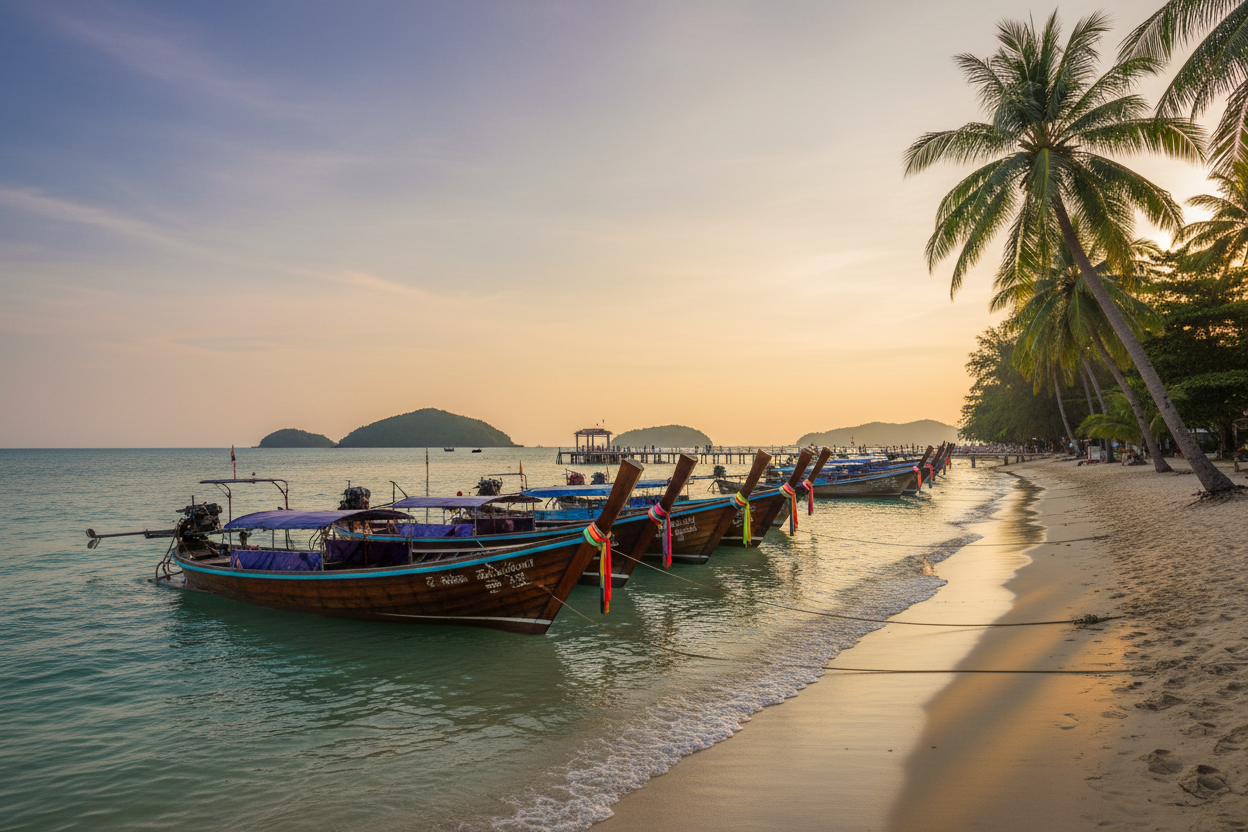
Near Rawai, boats are part of the shoreline rather than occasional visitors. Longtails sit in rows, bows lifted above the shallows, their coloured ribbons moving while the hulls remain still. Behind them are seafood restaurants, houses and the low activity of a place organised around departure.
Laem Ka occupies a quieter fold nearby. Its eastward orientation gives the water a gentler character in suitable weather, with Ko Bon and the smaller offshore islands appearing as distinct green masses across the channel.
The sand is not the startling white of Freedom Beach. It is warmer, more subdued, and the shallows may carry the softened green associated with Phuket's eastern side. Casuarina and tropical foliage provide shade close to the water, while fishing and pleasure boats pass in the distance.
The cove is most evocative in the morning. Light arrives from behind the offshore islands, laying bright paths across the channel. Longtails begin to move out from Rawai, their engines audible before the boats themselves become visible. Laem Ka feels less like a hidden beach in the romantic sense than a private vantage upon southern Phuket's maritime life.
The Unnamed Indentations
The most memorable stop may not have a sign, a restaurant or even a dependable strip of sand.
Between established beaches, Phuket's coast contains minor recesses that barely register on a map. A captain may know one as a place protected from a northerly wind, another as somewhere the seabed remains clear after rain, another as a convenient pause while the tide rises enough for the next landing.
One might consist of coarse beige sand below a wall of creepers. Another may be a rock basin where the water turns transparent over a pale bottom. Some are occupied only by birds and the white residue of salt left above the tide line.
These places resist permanent description because they are unstable. The sand migrates. Branches fall during storms. Water clarity changes. Plastic may wash ashore and be removed. A cove may be serene at nine and untenable by noon.
This is why the route should never be sold as a rigid collection of guaranteed "secret beaches." The captain's knowledge matters more than the printed sequence. The better question is not, "Which five coves will we visit?" It is, "Which part of the coast is behaving beautifully today?"
A Day Written by Conditions
In calm-season weather, a west-coast journey might begin near Patong and move south towards Freedom Beach before continuing past the smaller bays around Tri Trang. If Freedom is crowded, the boat may remain only briefly, then seek quieter water near the granite margins below Karon or Kata.
A southern itinerary begins differently. From Rawai or Chalong, the boat follows the headlands around Ya Nui and Promthep, pausing where the wind leaves a section of water smooth. Ao Sane may provide clearer snorkelling; a narrow inlet below the cape may offer the most striking swim; another beach may be rejected because the landing is rough.
Nothing is lost by changing course. The quality of a private day depends upon discernment, not obedience to a list.
Lunch may be served beneath the boat's canopy while anchored off a small beach. Fruit is cut on a wooden board. Condensation gathers on cold bottles. Wet towels hang from the rails. Beyond the bow, granite rises through water clear enough to show the anchor line descending to the sand.
The experience is not dramatic in the manner of Phi Phi or Phang Nga Bay. There are no monumental karsts or famous lagoons. Its beauty lies closer to the body: the temperature change beneath a headland, the roughness of salt drying on skin, the flicker of fish over stone, the resinous scent of heated trees after midday sun.
Leaving the Cove as It Was
Small beaches reveal damage quickly. A bottle left behind is not absorbed into a broad resort shoreline; it remains conspicuous beneath the trees. Loud music fills the entire enclosure. Feeding monkeys or fish changes behaviour in a place too compact to carry the consequences discreetly.
Nothing should be taken from the water or shore. Coral, shells and marine life should remain in place. Access restrictions must be respected, particularly where paths cross private land or local conditions have changed. Wildlife should be observed without food or pursuit.
A cove's privacy is temporary. Another boat may arrive. Local fishermen may already be there. Residents may use the shore in ways invisible to visitors.
The finest version of the day leaves no proof of having occurred, except salt on the deck and a sequence of places remembered with unusual clarity.
Explore the Hidden Coves
Charter a private longtail to explore Phuket's hidden coves — Freedom Beach, Laem Singh, Ao Sane, Ya Nui and the coast beyond.
View Hidden CovesRelated Guides
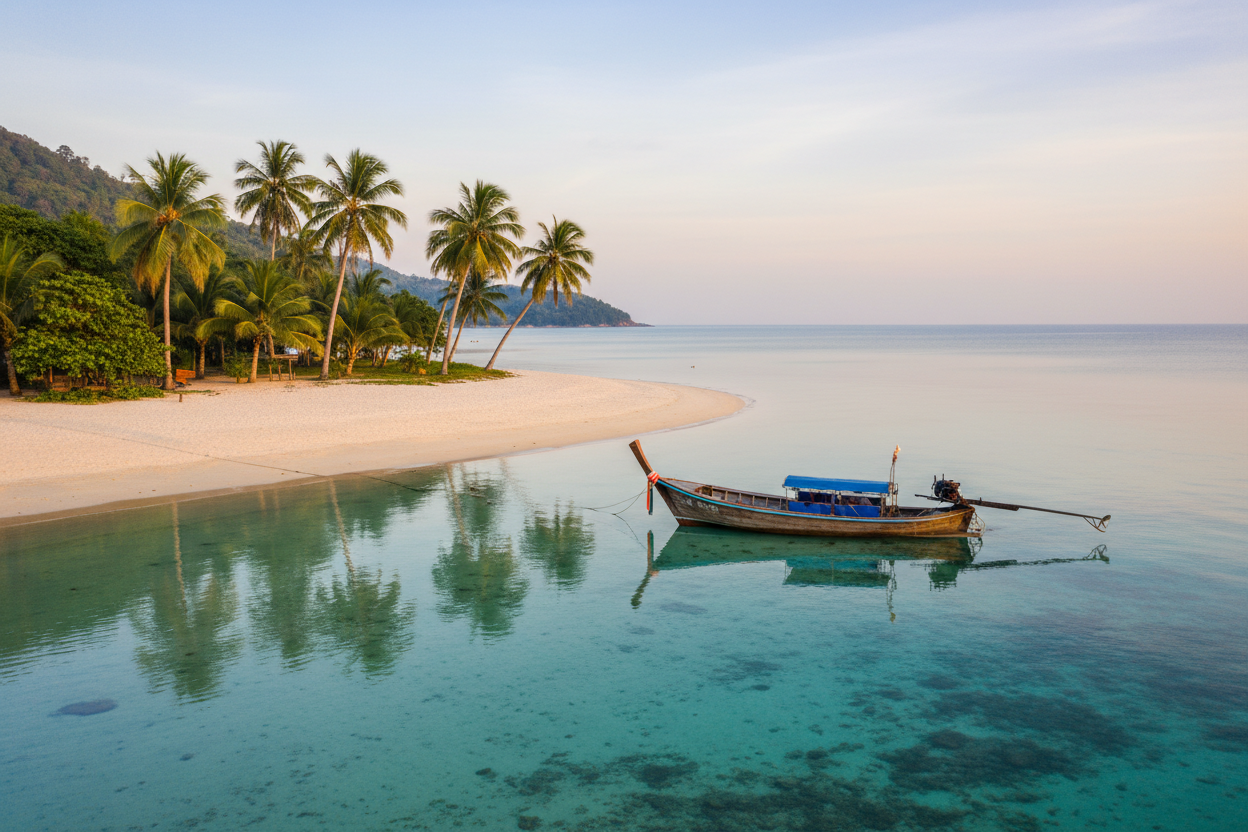
Koh Bon Guide: Beaches, Restaurant, Snorkelling & Amenities
A quiet, untouched gem minutes from Rawai — perfect for a peaceful half-day escape by traditional longtail.
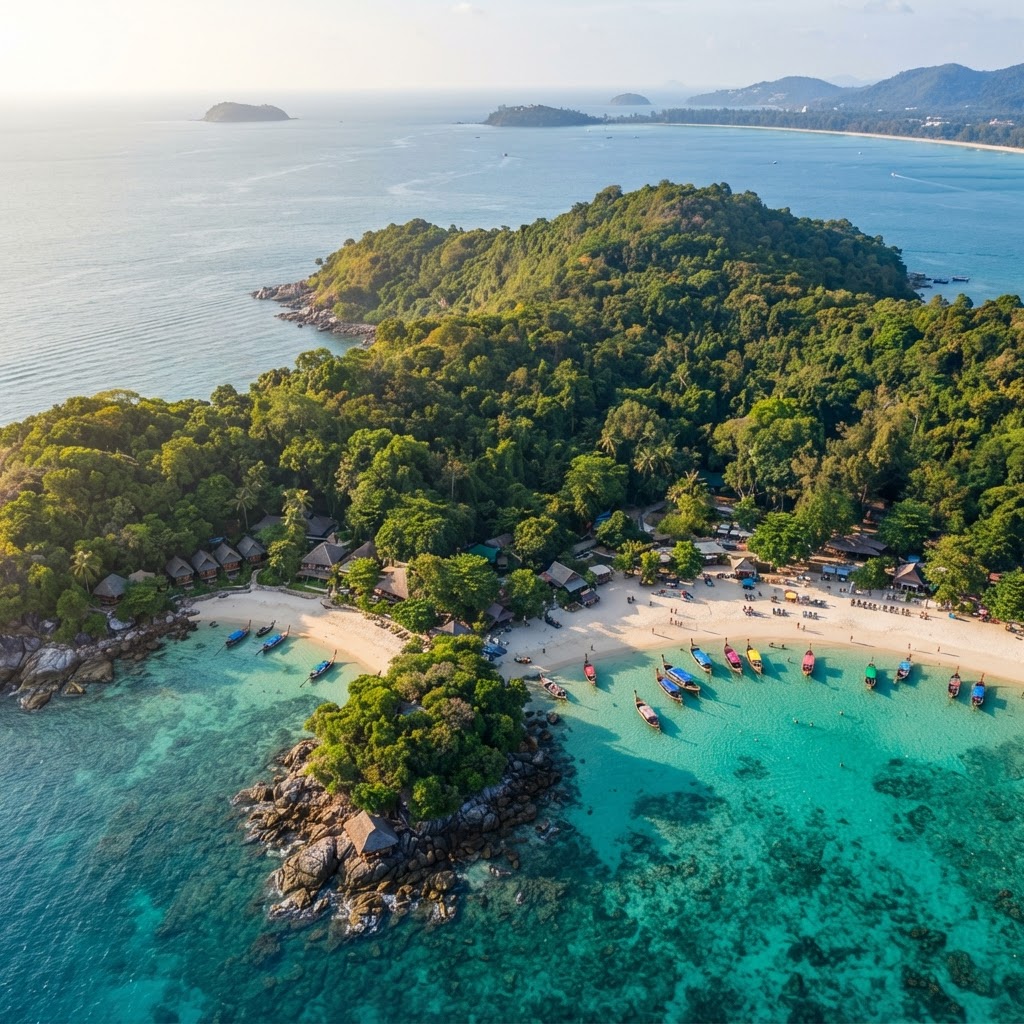
Coral Island Guide: Snorkelling, Beaches & Day Trips from Phuket
A lively island with vibrant reefs and white sand, just a short cruise from Phuket's east coast.
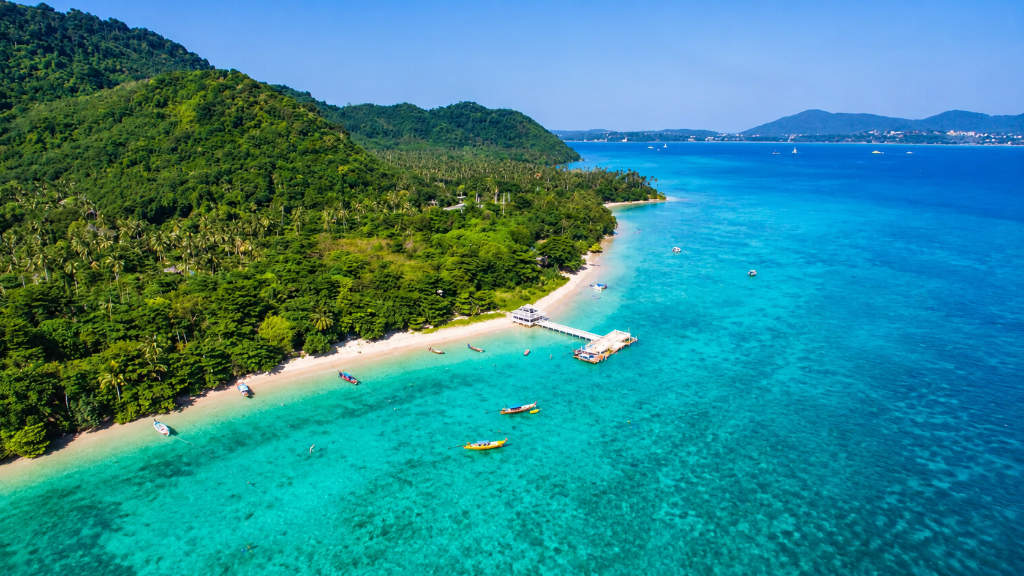
Ko Lon Guide: Beaches, Village Life, Hotels and Beach Club
A green island of tidal shores, village life and long lunches by the sea in Chalong Bay.